How I Stopped Just Saving and Started Growing My Money
For years, I thought financial health meant saving more and spending less. But my money barely kept up with life’s costs. Then I realized: protecting your cash isn’t enough—growing it is the real game. I shifted from just budgeting to actively managing my assets. It wasn’t about risky bets, but smart, daily habits that build long-term value. This is how I found a practical way to make my money work for me—without losing sleep over risk.
The Wake-Up Call: When Savings Aren’t Enough
For over a decade, I prided myself on being a disciplined saver. I tracked every grocery receipt, avoided impulse buys, and consistently set aside a portion of each paycheck. My savings account grew slowly but steadily, and I felt a quiet sense of accomplishment each time I checked the balance. Yet, when I finally sat down to assess my financial progress, I was shocked. The house I wanted was further out of reach than ever. A family vacation that once seemed manageable now required aggressive budgeting. Even everyday items cost more than they had just five years earlier. That’s when I realized the uncomfortable truth: my savings were losing ground, not gaining it.
The culprit wasn’t poor discipline—it was inflation. While my money sat in a traditional savings account earning less than 1% annually, the cost of living rose at an average rate of nearly 3% per year over the same period. That gap meant my purchasing power was quietly shrinking. What felt like financial safety was, in reality, a slow erosion of wealth. I had been playing defense, trying to preserve what I earned, but I wasn’t building anything lasting. This realization was my wake-up call. I began to understand that financial health isn’t just about how much you save—it’s about how well your money grows. True financial progress requires asset appreciation, not just accumulation.
Asset appreciation means increasing the value of what you own over time. Unlike income, which stops when you stop working, appreciating assets can continue to grow and generate returns even when you’re not actively earning. This shift—from saving to growing—meant redefining my relationship with money. Instead of seeing my bank balance as a measure of restraint, I began to view it as a foundation for opportunity. I didn’t need to become a stock trader or take reckless risks. What I needed was a thoughtful, sustainable approach to making my money work harder than I did. That journey started with a simple but powerful change: I stopped asking, “How much can I save?” and started asking, “How can I grow what I have?”
Rethinking Daily Financial Management
Once I accepted the need for growth, the next step was integrating that mindset into my daily life. I quickly learned that building wealth isn’t driven by dramatic, one-time decisions—like winning the lottery or landing a massive bonus. It’s shaped by the small, consistent choices most people overlook. I began to see my daily financial habits not as restrictions, but as building blocks for long-term freedom. Budgeting, which I once saw as a chore, became a tool for empowerment. Every dollar I allocated was no longer just about limiting spending—it was about directing energy toward growth.
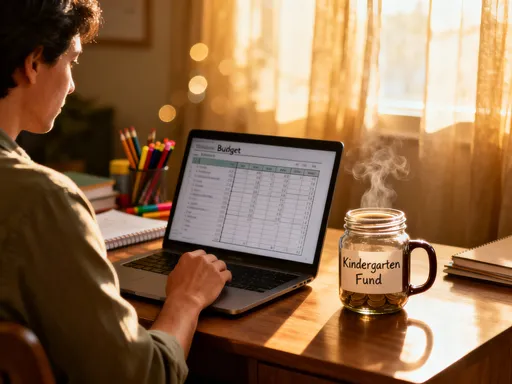
I started by analyzing where my money actually went. Using a simple spreadsheet, I categorized my expenses and identified areas where small adjustments could free up cash. I wasn’t talking about cutting out coffee entirely—though I did reduce my takeout orders—but rather redirecting funds that weren’t adding lasting value. That extra $50 a month from skipping one dinner out didn’t go into savings this time. Instead, I set up an automatic transfer to a low-cost index fund. Over time, these redirected dollars began to accumulate. More importantly, they started earning returns, which then earned their own returns. This process, known as compounding, only works when money is actively invested—not sitting idle.
Another shift was changing how I viewed windfalls. Tax refunds, birthday checks, or work bonuses used to go straight into my checking account, where they often disappeared into unplanned spending. Now, I treat them as growth opportunities. As soon as I receive unexpected money, a portion—usually 50% to 70%—is automatically invested. This rule removes emotion from the decision and ensures that luck contributes to long-term goals. I also began tracking not just expenses, but investment progress. Monthly, I reviewed how my portfolio was performing, not with anxiety, but with curiosity. This regular check-in helped me stay engaged without becoming obsessive. Over time, I realized that daily financial management isn’t about perfection—it’s about consistency. The real power lies in showing up, making small choices, and letting time do the rest.
Building a Simple Asset Growth Framework
With a new mindset in place, I needed a structure to guide my actions. I didn’t want to overcomplicate things with complex strategies or risky bets. What I needed was a clear, repeatable framework that balanced growth with stability. After researching and experimenting, I built a three-part system: protect, grow, and monitor. This approach gave me confidence because it aligned with my values—security, simplicity, and long-term progress.
The first pillar, protect, ensured that I wasn’t putting my financial foundation at risk. I maintained an emergency fund equal to six months of living expenses in a high-yield savings account. This fund was strictly off-limits for investing. Its purpose was to cover unexpected costs—like car repairs or medical bills—so I wouldn’t need to sell investments at a loss during a downturn. Knowing this safety net existed allowed me to take measured risks elsewhere without fear. I also made sure my insurance coverage—health, home, and auto—was up to date. Protection isn’t flashy, but it’s essential. Without it, any growth could be wiped out by a single emergency.
The second pillar, grow, focused on putting surplus money to work. Once my emergency fund was secure, I began investing in diversified, low-cost options. I chose broad-market index funds that track the overall performance of the stock market. These funds offer exposure to hundreds of companies, spreading risk and reducing the impact of any single stock’s failure. I also allocated a smaller portion to bond funds for stability, especially as I approached midlife. My investment strategy wasn’t about timing the market or chasing hot trends. It was about consistency—automating monthly contributions and staying the course, regardless of short-term fluctuations.
The third pillar, monitor, ensured I stayed on track without micromanaging. I reviewed my portfolio once a month, not to react to daily swings, but to check alignment with my goals. If one asset class grew too large—say, stocks outperformed bonds—I rebalanced by selling a portion and reinvesting in the underweight area. This practice kept my risk level consistent and reinforced disciplined decision-making. The beauty of this framework was its simplicity. It didn’t require hours of research or constant attention. Instead, it created a rhythm—protect first, grow steadily, monitor regularly—that made financial progress feel achievable, even on busy days.
The Power of Compounding in Ordinary Life
One of the most transformative lessons I learned was the power of compounding. At first, it sounded like a concept reserved for finance experts or millionaires. But in reality, compounding works quietly and effectively for anyone who gives it time. It simply means earning returns not just on your initial investment, but on the returns themselves. Over months and years, this snowball effect can turn modest contributions into significant growth. I didn’t need to start with thousands—what mattered was starting early and staying consistent.
I began with just $100 a month invested in a low-cost index fund with an average annual return of about 7%, based on historical market performance. After one year, I had $1,200 in contributions, but the account balance was slightly higher due to gains. That difference seemed small—maybe $40 or $50. But over ten years, the effect became undeniable. Without increasing my monthly contribution, the account grew to over $17,000, thanks to reinvested gains. After 20 years, that same $100-a-month habit could result in a balance exceeding $50,000, assuming steady returns. None of this required market timing or complex strategies—just patience and discipline.
What made compounding work for me was automation. I set up a direct transfer from my checking account to my investment account on the same day each month. This removed the need to remember or decide, making consistency effortless. I also chose funds that automatically reinvested dividends—the payments companies make to shareholders. Instead of receiving cash, those payments bought more shares, which then generated their own returns. Over time, reinvested dividends accounted for a significant portion of my total growth. I stopped looking at my account daily. Instead, I reviewed it quarterly, focusing on long-term trends rather than short-term noise. This approach reduced stress and kept me from making emotional decisions during market dips.
The real lesson was this: time is more valuable than the size of your initial investment. A person who starts investing $200 a month at age 35 may end up with less than someone who starts with $100 a month at age 25, simply because of the extra decade of compounding. This doesn’t mean it’s too late to start if you’re older—it means it’s never too early. Compounding rewards consistency, not perfection. Even irregular contributions, when maintained over time, can build meaningful wealth. The key is to begin, stay invested, and let time work in your favor.
Risk Control: Avoiding Costly Mistakes
One of my biggest fears when starting to invest was losing money. I had heard stories of people who lost everything in market crashes or risky bets. I didn’t want growth at the cost of sleepless nights. So, I made risk control a core part of my strategy. I learned that smart growth isn’t about avoiding risk entirely—it’s about managing it wisely. The goal isn’t to eliminate risk, but to understand it, reduce unnecessary exposure, and protect what I’ve built.
Early on, I made a few mistakes. I once invested in a single stock because a friend recommended it, only to watch it drop 30% in a few months. I panicked and sold at a loss, locking in the mistake. Another time, I pulled money out of the market during a downturn, fearing a crash. When prices recovered, I missed the rebound. These experiences taught me valuable lessons. I realized that emotional decisions—driven by fear or excitement—were more dangerous than market volatility itself. To prevent repeating these errors, I established clear rules. First, I stopped investing in individual stocks unless I was willing to hold them for at least five years. Second, I committed to diversification—spreading my money across different asset classes so no single failure could derail my plan. Third, I set predetermined exit points, so I wouldn’t sell in a panic.
I also learned to ignore financial hype. Media headlines often amplify fear or excitement, pushing people to buy high and sell low. Instead of reacting to news, I focused on my long-term plan. I reminded myself that market fluctuations are normal—periods of decline are part of the cycle, not a sign of failure. Historically, the market has recovered from every major downturn, and those who stayed invested benefited from the rebound. I accepted that short-term losses are possible, but only if I sold during them did they become permanent. By staying diversified and maintaining a long horizon, I reduced the impact of any single event.
Another key practice was regular portfolio reviews. Every quarter, I assessed whether my investments still aligned with my goals and risk tolerance. If life changes—like a new job, marriage, or approaching retirement—affected my needs, I adjusted accordingly. This proactive approach helped me avoid complacency. Risk control isn’t a one-time decision—it’s an ongoing process. By building guardrails into my strategy, I gained confidence. I could pursue growth without gambling. I learned that protecting capital is just as important as growing it. True financial progress isn’t measured by how high your returns go, but by how well you preserve them when times get tough.
Practical Tools That Fit Real Life
With my strategy in place, I needed tools that made execution easy. I didn’t want to spend hours analyzing charts or checking stock prices. I wanted a system that worked with my schedule, not against it. After trying several apps and platforms, I found a few that delivered real value without complexity. The best ones shared common traits: they were automated, user-friendly, and focused on long-term results.
My most powerful tool was automated investing. I linked my checking account to a low-cost brokerage platform and set up recurring transfers. Every month, on payday, a fixed amount moved from checking to my investment account and was automatically allocated to my chosen funds. This removed decision fatigue and ensured consistency. I didn’t need to remember to invest—I didn’t even need to log in. The system worked whether I was busy with family, traveling, or simply tired after a long day. Automation turned intention into action, every single month.
I also used a simple dashboard to track progress. It showed my total balance, asset allocation, and performance over time—all in one clear view. I avoided platforms that bombarded me with data, alerts, or trading suggestions. My goal wasn’t to become an active trader, but a disciplined investor. The dashboard gave me peace of mind without encouraging obsession. I checked it once a month, just to confirm everything was on track. If adjustments were needed—like rebalancing after a market shift—I made them then, calmly and deliberately.
Another helpful feature was fractional shares. Some platforms allowed me to invest exact dollar amounts, even if they didn’t buy a full share of a stock or fund. This meant I could fully utilize every dollar, without leaving money idle. It also made diversification easier, since I could spread small amounts across multiple funds. I also appreciated low fees. High expense ratios eat into returns over time, so I prioritized funds with costs below 0.20% annually. Over decades, even a small difference in fees can result in thousands of dollars in lost growth. By choosing efficient tools, I maximized what stayed in my pocket.
Convenience wasn’t laziness—it was sustainability. The easier I made the process, the more likely I was to stick with it. I didn’t need motivation to invest; I needed a system that removed barriers. These tools didn’t guarantee returns, but they supported the behaviors that lead to long-term success: consistency, discipline, and focus.
Making Financial Growth a Habit, Not a Chore
The final shift wasn’t about money—it was about mindset. For years, I saw investing as something separate from daily life, reserved for experts or people with extra cash. I associated it with stress, complexity, and risk. But as my habits took root, my perspective changed. Investing became as routine as grocery shopping or paying bills. It no longer felt like a burden or a gamble. It felt like a quiet, steady act of care for my future.
I stopped measuring success by daily balance checks or quarterly returns. Instead, I celebrated milestones quietly—a year of consistent contributions, a rebalancing completed, a new financial goal added. These small wins built confidence. I realized that real wealth doesn’t announce itself with fanfare. It grows in silence, through repetition and patience. I no longer waited for the “perfect” moment to start or increase investing. I accepted that some months would be tighter than others, and that was okay. What mattered was the long-term trend, not short-term perfection.
Today, my money works even when I’m not thinking about it. The automated transfers continue. The investments compound. The portfolio rebalances. I review it regularly, but I don’t obsess. The peace of mind I’ve gained is priceless. I no longer fear unexpected expenses or wonder if I’ll have enough for the future. I know that my financial foundation is stronger because I chose growth over stagnation. This journey wasn’t about getting rich quickly. It was about building resilience, one small decision at a time. And that, more than any dollar amount, is the true measure of asset appreciation.