It's Not Just About Taking Out the Trash: How Smart Bins Helped Me Stay Connected with Friends
We’ve all been there—juggling work, chores, and social life, only to realize we haven’t seen our closest friends in weeks. I felt the same, until a small change at home made a big difference. A smart trash bin didn’t just simplify my routine; it quietly created moments of connection. It reminded me to reach out, share little updates, and even laugh over forgotten leftovers. Technology isn’t always about screens or messages—sometimes, it’s the quiet helpers that bring us closer to the people we care about. And for me, that helper came in the form of a simple kitchen appliance that did more than hold garbage. It became a tiny bridge between my daily life and the women who matter most.
The Unlikely Starting Point: When a Trash Can Became a Conversation Starter
Let’s be honest—no one wakes up dreaming about trash. But life, as we know, is made up of small things: loading the dishwasher, folding laundry, taking out the garbage. These moments can feel invisible, especially when you're balancing a job, kids, or aging parents. I used to dread the smell, the mess, the mental reminder that I had to deal with it again. Then one day, my sister sent me a link to a smart trash can. 'It empties itself,' she said. I laughed. But I clicked. And six days later, it arrived at my door—a sleek, voice-responsive bin that sealed odor-proof bags automatically.
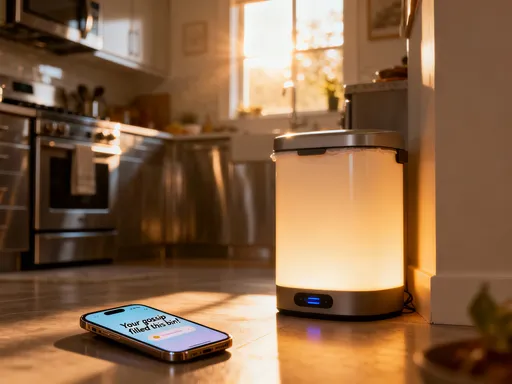
The first time it notified me it was full, I didn’t jump to empty it. Instead, I took a screenshot and texted my best friend since college. 'Guess what just filled up? Your last drama!' I wrote. She replied instantly: 'Wait, your trash talks back now?' We both cracked up. That little joke sparked a 45-minute voice note exchange about our weeks—her job stress, my daughter’s soccer game, the weird dream I had about flying over a landfill. It felt light. It felt real. And it happened because a machine sent a notification I chose to share.
That’s when I realized: this wasn’t about convenience. It was about connection. The bin didn’t force me to talk to her, but it gave me a reason—a silly, low-stakes reason—to reach out. And in our busy lives, sometimes that’s all we need. A nudge. A laugh. A shared moment that says, 'I’m thinking of you.' Over time, these messages became part of our rhythm. I didn’t wait for big news to check in. I shared the small stuff. And somehow, the small stuff became the glue.
From Chores to Connection: How Small Tech Moments Build Bonds
Chores are often seen as the background noise of adult life—the things we do when we’re not living. But what if they could be part of living? What if folding clothes or loading the dishwasher could spark joy, or at least a smile from a friend? That’s what happened when I started treating smart bin alerts as mini social prompts. Instead of silencing the notification, I’d screenshot it and send it to my friend group chat with a caption like, 'This bin is full of unsent texts and regret.' Someone always replied with a meme or a joke.
One evening, the bin alerted me about rising odor levels—apparently, fish leftovers had overstayed their welcome. I snapped a photo and sent it to my college roommate with, 'Smells like your famous tuna casserole again.' She fired back: 'That casserole won the dorm cook-off, thank you very much!' That silly exchange led to a 20-minute call about old memories, our first apartments, how we both still hate folding fitted sheets. We hadn’t talked in weeks, but the bin broke the silence without pressure.
Here’s the thing: deep conversations don’t always start with 'How are you really?' Sometimes, they start with a joke about garbage. The smart bin didn’t replace meaningful talks—it kept the path clear between them. When we’re constantly overwhelmed, even small emotional gaps can grow into distance. But when a simple alert becomes a shared laugh, it maintains the thread. It says, 'I see you. I’m here. Life is messy, and that’s okay.' And for women who’ve spent years holding everything together, that kind of low-effort, high-warmth connection is priceless.
Designing for Togetherness: The Hidden Social Features of Smart Bins
I’ll admit—I didn’t think a trash can could have social features. But modern smart bins do more than detect fullness. Many sync with home apps, allow remote monitoring, and even support shared notifications. When I discovered I could add family and friends to my bin’s alert list, I got an idea. I invited my sister, my best friend, and my cousin—three women who’ve seen me through breakups, job changes, and my infamous attempt at sourdough during lockdown.
Now, when the bin is full, we all get a notification. The rule? Whoever is home handles it. But we always chat first. 'You take this one, I’ll owe you coffee!' has become our ritual. Sometimes, someone sends a voice message through the app: 'Bin’s full! Sending courage and hand sanitizer!' It sounds small, but it feels big. It’s proof we’re still part of each other’s daily lives, even when we’re not in the same city.
One night, I recorded a dramatic voice alert: 'This is a Bin Emergency! Repeat: Bin Emergency! Immediate action required!' I set it to play when the lid opened. My friend, visiting her mom, opened her app and heard it. She played it at her book club—and they all laughed so hard they had to pause the discussion. 'Your trash is more entertaining than our novel,' she told me later. But beneath the humor was something deeper: we had turned a chore into a shared experience. The technology wasn’t designed for friendship, but we made it one. And that’s the magic of smart home tools—they adapt to our lives, not the other way around.
Breaking the Routine: How Automation Creates Space for Meaning
One of the quietest benefits of the smart bin? It lifted a tiny but persistent weight off my mind. Before, I’d walk into the kitchen and wonder: 'Is it full? Did I forget last time? Is that smell coming from the bin or the fridge?' These small questions add up. They’re part of what psychologists call 'mental load'—the invisible labor of managing a household. As women, many of us carry this load without even realizing it, until we get a break.
The smart bin didn’t eliminate chores, but it reduced the guesswork. It tells me when it’s full. It seals the bag automatically. It even orders new liners when running low. That might sound like overkill, but for someone juggling work emails, school pickups, and aging parents, those few seconds saved matter. And more than time, it saved emotional energy. I wasn’t walking around with a low-level hum of 'I should deal with the trash' in the back of my mind.
That calm followed me into my relationships. I started showing up differently in conversations. I wasn’t distracted, rushing, or mentally elsewhere. My friend noticed. 'You seem lighter lately,' she said during our weekly call. I thought about it and realized: yes, I did. I wasn’t just less stressed about trash—I was more present. The bin hadn’t fixed my life, but it had cleared space in it. And in that space, connection could grow. Technology, at its best, doesn’t do everything for us. It gives us back the mental room to do what matters—like listening, laughing, and being there for each other.
Shared Living, Even When Apart: Smart Bins in Long-Distance Friendships
When my best friend moved to London for her husband’s job, I worried we’d drift. We’d been close for 18 years—through college, weddings, miscarriages, and her mom’s illness. But distance changes things. Calls got shorter. Texts went unanswered for days. I missed her. Then I had an idea: I started sending her photos of my smart bin with captions like, 'Your drama filled this one' or 'This is 70% your bad dating stories.' She loved it.
We launched 'Trash Talk Tuesdays'—a weekly ritual where I’d send a bin update, and she’d reply with a voice note. Sometimes it was silly. Sometimes it wasn’t. One week, the bin was full, and I was overwhelmed with work. I sent a photo with, 'This is how I feel inside.' She called me that night. We talked for an hour. She didn’t offer solutions—just presence. And it helped more than any advice could.
The bin became a shared reference point, a tiny digital thread linking our lives. When she visited last winter, the first thing she did was hug me—then go straight to the kitchen to 'meet the famous bin.' She opened it, laughed at the automatic seal, and said, 'I can’t believe this thing kept us close.' But it wasn’t the bin. It was what we made of it—a symbol of care, consistency, and the kind of friendship that finds a way, even across oceans. In a world where we’re often connected by screens but disconnected in spirit, that kind of ritual matters.
Building Rituals Around Tech: From Function to Feeling
We don’t just use the bin—we celebrate it. Emptying it has become a mini-event in my home. Sometimes I play a 'Garbage Glow-Up' playlist—upbeat songs from our college years. Once, I did a live voice call with two friends while taking it out. 'You’re witnessing history,' I said. 'The bin is full, and I’m doing it with joy.' They cheered me on like I was finishing a marathon.
These moments aren’t grand, but they’re consistent. And consistency is the foundation of trust. In friendships, it’s not always the big gestures that matter—it’s the showing up, again and again. The bin gave us a new way to do that. Like sharing a meal or a walk, tending to the bin—remotely—became a quiet act of care. It said, 'I’m thinking of you. I’m living my life, and I want you in it.'
One friend started her own ritual: every time she empties her bin, she sends a gratitude text to someone. 'Today, I’m thankful for you,' she’ll write. 'And for not having to smell last night’s broccoli.' It’s simple. It’s real. And it strengthens her connections every week. The bin didn’t create these rituals, but it inspired them. It showed us that even the most ordinary tools can carry emotional weight when we infuse them with meaning.
The Bigger Picture: How Small Tech Can Strengthen Human Ties
Looking back, I see how this small change made a ripple. A smart bin won’t fix a broken friendship or replace a heart-to-heart. But it can help maintain a good one. In a world where we’re bombarded with digital noise—endless emails, social media comparisons, news alerts—it’s easy to feel connected yet lonely. We’re always 'on,' but rarely truly present.
The smart bin offered something different: a quiet, low-pressure way to stay in touch. It didn’t demand attention. It didn’t create guilt. It simply created opportunities—for a laugh, a memory, a moment of care. And those moments added up. They reminded me that friendship isn’t about grand plans or perfect timing. It’s about showing up in the small ways, again and again.
Technology often gets blamed for pulling us apart. But what if we used it to pull us closer? What if we stopped seeing gadgets as distractions and started seeing them as enablers of connection? A smart bin, a shared notification, a silly voice message—these aren’t just features. They’re invitations. Invitations to laugh, to check in, to say, 'I’m here.'
For women who’ve spent years nurturing others—our families, our friends, our communities—this kind of gentle, sustainable connection is a gift. It doesn’t require extra time or energy. It works within the life we already have. And sometimes, it starts in the most unexpected place: the kitchen corner, next to the recycling, where a quiet little machine says, 'You’re not alone.'