More than alerts: Apps that helped me find balance without burning out
Life moves fast, and it’s easy to feel like you’re constantly choosing between being productive and being present. I used to miss meals, skip breaks, and work late just to “catch up.” But everything changed when I stopped seeing health apps as nagging reminders and started using them as quiet allies. They didn’t add more to my day—they helped me protect what mattered most. Now, those little pings aren’t interruptions. They’re invitations—to breathe, to stretch, to drink water, to pause and remember that I’m not a machine. And slowly, without even realizing it, I began to feel like myself again.
The Moment I Realized I Was Running on Empty
It wasn’t a dramatic crash. No hospital visit, no breakdown—just a slow, quiet unraveling that I didn’t notice until it was nearly too late. I was the kind of person who prided myself on being “on it.” My calendar was color-coded, my to-do list endless, and my sense of accomplishment tied tightly to how much I could check off before bedtime. But somewhere along the way, I stopped feeling good about any of it. I was tired all the time, even after eight hours of sleep. My shoulders ached from hunching over my laptop, my eyes felt dry from staring at screens, and I’d find myself zoning out during dinner, barely hearing what my kids were saying.
The truth was, I wasn’t present. I was physically there, but mentally and emotionally, I was miles away—still in work mode, still solving problems, still worrying about tomorrow’s deadlines. I wasn’t enjoying my life. And the worst part? I thought this was normal. I thought this was what it meant to be a responsible adult, a dedicated parent, a hard worker. I had internalized the idea that if I wasn’t busy, I wasn’t doing enough.
Then one afternoon, as I sat at my desk for the sixth hour straight, my phone buzzed. Just a simple notification: “You haven’t taken a break in three hours.” I almost dismissed it—another annoying alert from yet another app trying to tell me how to live. But something about it stopped me. Not the message itself, but the fact that it was true. I hadn’t moved. I hadn’t stood up. I hadn’t even looked out the window. And in that moment, I realized how disconnected I’d become from my own body. I wasn’t listening to it at all. No wonder I felt so drained.
That tiny alert was the first crack in the wall I’d built around myself. It didn’t fix everything, but it made me pause. It made me ask: How did I get here? And more importantly, how could I get back to feeling like me? I didn’t need to do more. I needed to care for myself, in real, tangible ways. And strangely, the very thing I thought was part of the problem—technology—turned out to be part of the solution.
From Annoyance to Ally: Changing My View of Health Apps
Let’s be honest—most of us have had a love-hate relationship with app notifications. One minute, your phone is gently reminding you to drink water; the next, it’s interrupting a family moment with a sales alert from a store you browsed once. It’s no wonder we start to see all notifications as nuisances. I used to silence them all, convinced that if I just ignored the noise, I’d stay in control. But the truth is, I wasn’t in control. I was just ignoring the signals—both from my phone and from myself.
What changed for me was a shift in mindset. Instead of seeing health apps as robotic taskmasters, I started to think of them as quiet supporters—like a thoughtful friend who knows when you need a nudge. That “drink water” reminder? It wasn’t nagging. It was caring. That “time to stretch” alert? Not a demand, but an invitation to care for my body. Once I reframed these messages as acts of kindness—toward myself—the resistance faded.
I also learned that personalization makes all the difference. I switched the alert tones to soft chimes instead of sharp beeps. I adjusted the timing so reminders didn’t pop up during dinner or bedtime stories. I even wrote custom messages like “Hey you, take a breath—you’ve got this” or “Pause for a moment. You’re doing great.” These small tweaks made the experience feel less like a machine talking to me and more like I was talking to myself—with compassion.
And not all apps are created equal. I stopped downloading every new wellness app that hit the store and instead focused on a few that aligned with my values: simplicity, kindness, and sustainability. I looked for tools that didn’t shame me for missing a goal or guilt-trip me into doing more. The ones that stayed on my phone were the ones that felt supportive, not stressful. They didn’t ask me to be perfect. They just asked me to show up, in small ways, every day.
Building Micro-Moments That Add Up
One of the biggest lessons I’ve learned is that balance doesn’t come from big, dramatic changes. It comes from tiny, consistent actions—the kind that seem too small to matter, until you realize they’ve completely transformed your days. That’s where app-powered micro-moments come in. These aren’t grand gestures. They’re 30-second pauses, one-minute stretches, two sips of water when you remember. But over time, they build a rhythm of care that becomes part of your life.
For example, I set a gentle alert for 8:00 a.m. that says, “Start with water.” It’s not fancy, but it works. Before I reach for coffee, I pour a glass of water and drink it while I stand by the window and watch the morning light. That one small habit has improved my energy, my digestion, and even my mood. It’s become my quiet ritual—a way to begin the day with intention instead of urgency.
In the afternoon, around 3:00 p.m., another alert pops up: “Stretch it out.” I used to ignore this time of day, pushing through fatigue with more caffeine. But now, I stand up, roll my shoulders, reach my arms overhead, and take three deep breaths. Sometimes I do a quick neck roll or touch my toes. It takes less than a minute, but it resets my body and mind. My back feels better, my focus sharpens, and I stop that 3 p.m. slump from dragging me down.
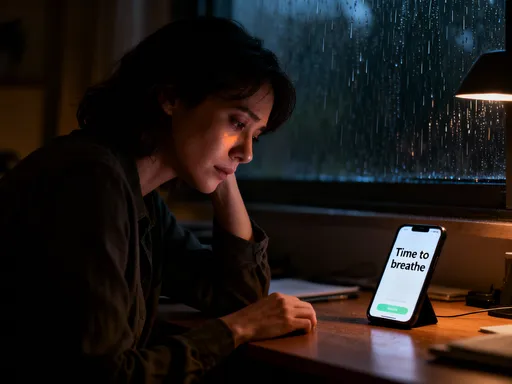
And in the evening, I have a wind-down series: a notification at 8:30 p.m. to start reducing screen brightness, another at 9:00 p.m. to begin a five-minute breathing exercise, and a final one at 9:30 p.m. that says, “Lights out in 30.” These cues help me transition from “doing” mode to “being” mode. I’m not forcing myself to sleep—I’m preparing for it. And because these moments are tied to alerts, I’m more likely to follow through, even on busy or stressful nights.
The beauty of these micro-moments is that they don’t require willpower. They’re not about discipline. They’re about design. By using apps to create gentle triggers, I’ve built a daily rhythm that supports my well-being without adding pressure. And the more I honor these small pauses, the more I notice their ripple effects—more patience with my kids, more joy in simple things, more space in my mind.
Protecting Time Like It’s Gold—Because It Is
We say time is precious, but do we treat it that way? For years, I let my schedule be dictated by other people’s demands. Meetings bled into lunch, work emails invaded dinner, and “just one more thing” kept me up past midnight. I thought I was being responsible. But really, I was giving away my most valuable resource—my time—without even realizing it.
What changed was simple: I started scheduling self-care like it was a non-negotiable meeting. I blocked off 12:00 to 12:30 p.m. as “Lunch & Walk” in my calendar. I set a daily alarm for 6:00 p.m. that says, “Work ends now.” And I marked Friday and Saturday evenings as “Family Time—No Screens.” These aren’t suggestions. They’re appointments with myself and my loved ones. And because they’re in my calendar, they feel official. They feel important.
At first, it felt awkward. What if someone scheduled over my lunch break? What if I didn’t finish everything by 6 p.m.? But I learned that the world doesn’t fall apart when I protect my time. In fact, the opposite happens. I became more focused during work hours because I knew I had a hard stop. I was more present with my family because I wasn’t mentally still at my desk. And I started sleeping better because I wasn’t scrolling through emails until midnight.
One of my favorite tools is the “Focus Mode” feature on my phone. I schedule it to turn on automatically every evening from 7 to 9 p.m. During that time, only calls from family and close friends come through. Everything else—social media, news, work messages—gets silenced. It’s not about cutting off the world. It’s about choosing where I direct my attention. And that small boundary has made a huge difference in how I feel by the end of the day.
Time isn’t something we find. It’s something we make—and protect. And when we use technology to guard our moments of rest, connection, and peace, we’re not being lazy. We’re being wise. We’re saying, “This part of my life matters.” And that mindset shift has been one of the most powerful changes of all.
When Tech Helps You Show Up for Others
Here’s something I didn’t expect: taking better care of myself didn’t pull me away from my family. It brought me closer to them. When I’m rested, hydrated, and not running on fumes, I’m a better listener. I’m more patient. I laugh more. I’m actually present when my daughter tells me about her day or my son shows me his latest drawing.
There was a time when I’d be on the couch with my kids, but my mind was still at work, or my hand was on my phone, checking one more thing. Now, because I’ve built in pauses throughout the day, I have more mental and emotional energy to give. I can sit on the floor and build a block tower without thinking about my to-do list. I can have a real conversation with my partner without mentally drafting an email.
And it’s not just about being there physically. It’s about being there fully. One evening, my daughter asked me to play dress-up. A year ago, I might have said, “Not now, I’m tired.” But that night, thanks to a full day of small resets—water, stretches, breaks—I had the energy to say yes. I put on a sparkly crown, danced to her favorite song, and laughed until my stomach hurt. It wasn’t a big moment in the grand scheme of things, but it was everything to her. And to me.
That’s the quiet power of self-care: it doesn’t make you selfish. It makes you available. It fills your cup so you can pour into others without running dry. And when you use technology to support that process—gently reminding you to breathe, move, rest—you’re not outsourcing your well-being. You’re creating the conditions for deeper connection, more joy, and more love in your everyday life.
Making It Work for Your Real Life (Not the Other Way Around)
Let’s be real—no system works if it feels like a chore. I’ve tried rigid routines, overly complex apps, and ambitious goals that set me up for failure. The key to lasting change isn’t perfection. It’s sustainability. It’s choosing one or two small habits that fit your life, not the other way around.
My advice? Start small. Pick one thing—just one—that would make a difference if you did it consistently. Maybe it’s drinking a glass of water when you wake up. Maybe it’s stepping outside for two minutes of fresh air. Set one gentle reminder and see how it feels. If it works, great. Add another. If it doesn’t, adjust it. Move the time, change the message, try a different tone. This isn’t about following a rule. It’s about creating a rhythm that feels good.
I also recommend integrating these tools into what you already use. If you live by your phone calendar, use it to block self-care time. If you wear a smartwatch, let it vibrate softly when it’s time to breathe or stand. If you love sticky notes, pair them with app alerts for double reinforcement. The goal isn’t to add more tech—it’s to make the tech you already have work for you in kinder, more supportive ways.
And be kind to yourself when life gets messy. There will be days when you miss every reminder. When the kids are sick, or work is overwhelming, or you just forget. That’s okay. This isn’t about being flawless. It’s about being consistent over time. One missed day doesn’t erase progress. Just start again tomorrow.
The most important thing is that technology serves your life—not the other way around. It should make you feel more human, not less. More in control, not more stressed. When you use apps as allies in your well-being, they become invisible helpers—there when you need them, quiet when you don’t.
The Quiet Revolution: Small Alerts, Big Changes
Looking back, I can see how far I’ve come. I’m not the same person who ignored her body’s signals, who thought burnout was a badge of honor. I still have busy days. I still have moments of stress. But now, I have tools—simple, gentle, human-centered tools—that help me find my way back to balance.
Those little alerts didn’t fix my life. But they created space—space to breathe, to notice, to choose differently. They reminded me, again and again, that I matter. That my well-being isn’t a luxury. It’s the foundation of everything else.
And the changes? They’re real. I have more energy. I sleep better. I laugh more. I’m more patient with my family. I feel more like myself. Not because I did something drastic, but because I started showing up for myself in small, consistent ways.
Balance isn’t found in grand gestures or extreme overhauls. It’s built in the quiet moments—in the breath you take because your phone reminded you, in the water you drink, in the stretch you do at your desk, in the boundary you honor. It’s in the decision to pause, to care, to be kind to yourself.
And if that means letting a little technology help me do it? I’m okay with that. Because these apps aren’t just tools. They’re quiet companions on a journey toward a calmer, more joyful, more present life. And honestly? I couldn’t have done it without them.